
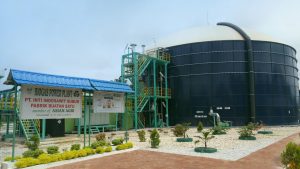
Rangers, now EcoRanger presents a solution for converting organic waste into biogas. For the first time, a new solution emerges to create biogas installations for the people of PancerVillage, Banyuwangi Regency. What is it? How does this solution address the problem of organic household waste management in Banyuwangi? Read more here!
Biogas

Biogas is an alternative energy source derived from organic waste and livestock manure. It can replace fuel because it produces methane gas. This waste management technology has been around for centuries. It existed in Assyria in the 10th century BC and in Persia in the 16th century BC. Although it was discovered long ago, it’s not popular and is not widely used, even today. Many people prefer to use coal and oil energy sources.
To produce biogas, it needs anaerobically decomposition of organic waste and animal waste with anaerobic digester. This process produces two main constituents of it: methane and carbon dioxide. However, the content can also vary depending on the decomposition process. The amount of methane it has determine its quality. Therefore, the higher methane content, the better the quality will get because it has more energy.
There are three processes in biogas production before it can be used. The first is hydrolysis process. Here, organic raw materials will go through the decomposition of compounds. The second is fermentation process. At this stage, the fermentation bacteria produce acetic acid. Third, the acetic acid produced decomposed by methanogenic bacteria to produce methane gas. Generally, it contains 60% methane and 30% carbon dioxide. After producing the gas, it is ready for use.
Benefits of Biogas

Biogas has many benefits for both humans and the environment. It can be used as fuel to generate electricity for our daily use. Furthermore, it is also an organic fertilizer. For the environment, this alternative energy is useful for reducing organic waste and livestock waste. This waste reduction is very meaningful to reduce greenhouse gases produced by garbage, waste, and the use of dirty energy.
Even though it has fruitful benefits, the use of this alternative energy in Indonesia is relatively low. The Ministry of Energy and Mineral Resources noted that there were only 47,505 biogas installation units in Indonesia. The installation produces 26.72 million m3 of biogas per year. This amount is certainly not enough for the needs of all Indonesians. In fact, the government targets 489 million m3 per year in 2025. This implementation is very far from the target.
EcoRanger Established Biogas in Banyuwangi

To support biogas utilization in Indonesia, we collaborate with Mandiri Bank and the Rumah Energi Foundation to build 10 biogas installations in Pancer Village, Banyuwangi Regency. We use Biomiru technology to make biogas. Different from other installations, we use Biomiru to make biogas on a household scale. Biomiru utilizes household organic waste as raw material for production. We inaugurated this collaboration with H. Sugirah as the Regent of Banyuwangi Regency on August 10, 2022.
We choose this technology because it has several advantages; it can overcome the problem of household organic waste, is economical, is free of dangerous smoke that threatens health, and occupies a small area for installation. Biomiru produces gas from recycled organic waste that can be used to replace LPG gas and as organic fertilizer. Before developing it in 10 locations, we have conducted a trial of Biomiru at the Waste Management Center (SEKOLA). The gas produced generates electricity and gas for SEKOLA’s operational needs. We expect the development of biogas increase the recycling of organic waste at SEKOLA to reduce residual waste sent to the waste processing center.